Have you ever walked into a store, looked at a product, and just felt… icky?
Maybe it was the suspicion that the smiling logo was hiding a sweatshop. Maybe it was the customer service rep who read from a script like a robot while you were on the verge of tears. Or maybe you’ve worked for a company where you felt like nothing more than a row on a spreadsheet—a “human resource” to be squeezed for every drop of productivity until you burned out.
I’ve been there. I think we all have.
For a long time, I thought this was just “how the world works.” I thought business was a cold, hard machine where nice guys finish last and the ruthless sharks take home the prize. I was cynical. I assumed that to be successful, you had to sell a little piece of your soul.
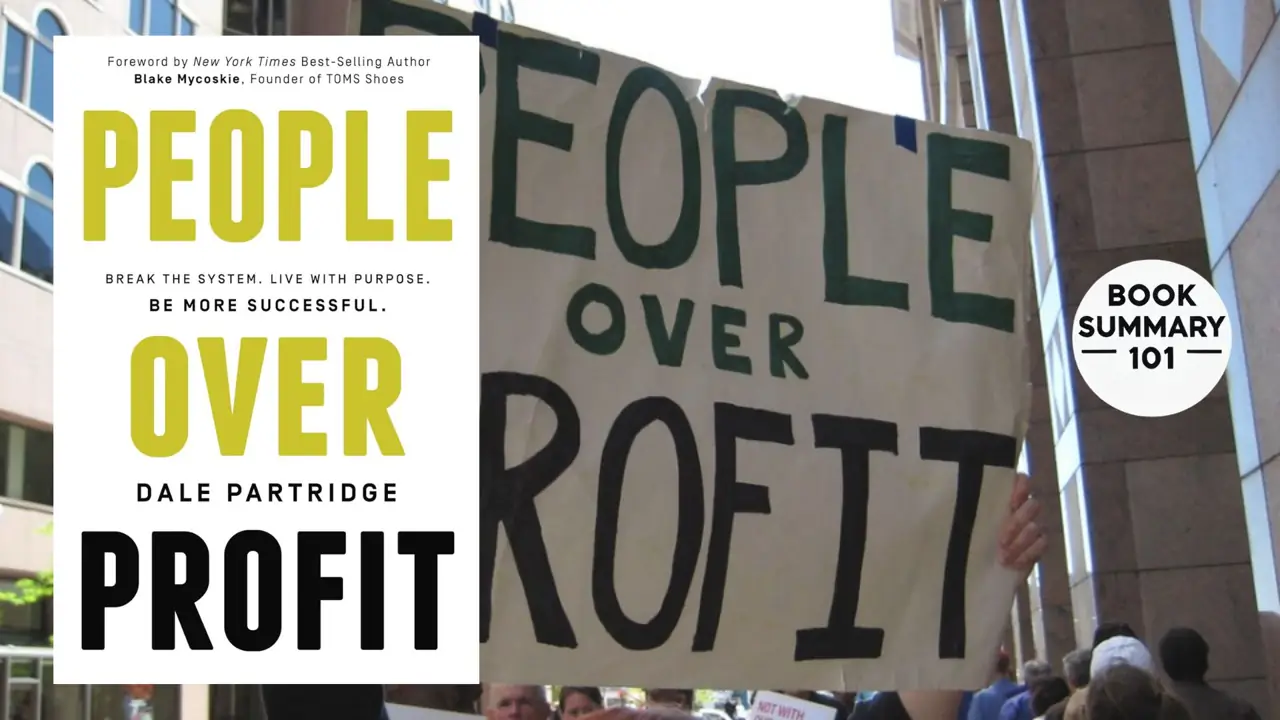
Then I picked up People Over Profit by Dale Partridge.
Reading this book didn’t feel like studying a business manual; it felt like sitting down with a mentor who was finally confirming what my gut had been telling me for years. It was a relief. Partridge argues that the old way of doing things—lying, cheating, and squeezing customers for cash—isn’t just morally wrong; it’s actually a terrible long-term business strategy.
If you are tired of the “greed is good” narrative, grab a cup of coffee. We need to talk about this book.
Why Should You Even Bother Reading It?
You might be thinking, “I’m not a CEO of a Fortune 500 company, so why does this matter to me?”
Here’s the thing: this book is for everyone.
- For the Entrepreneur: It’s a blueprint for building a company that won’t collapse under its own moral weight.
- For the Employee: It helps you identify toxic work cultures and understand why you feel undervalued.
- For the Consumer: It empowers you to understand the power of your dollar.
In today’s hyper-connected world, we can sniff out inauthenticity in seconds. This book explains why the companies of the future must care about people to survive, making it relevant to literally anyone who buys things or earns a paycheck.
- Why Should You Even Bother Reading It?
- The Cycle of Corporate Greed and How to Break It
- 1. The Cycle of Organizational Evolution (The “Relationship” Analogy)
- 2. The Era of Transparency (The “Glass Box” Analogy)
- 3. Generosity as a Business Model (The “Flowing River” Analogy)
- 4. Accessibility vs. Exclusivity (The “Velvet Rope” Analogy)
- 5. Quality Over Quantity (The “Slow Cooker” Analogy)
- My Final Thoughts
- Join the Conversation!
- Frequently Asked Questions (The stuff you’re probably wondering)
The Cycle of Corporate Greed and How to Break It
Partridge doesn’t just rant about bad business; he offers a specific framework to explain why companies go bad and provides actionable pillars to keep them on the right track.
1. The Cycle of Organizational Evolution (The “Relationship” Analogy)
Imagine you start dating someone new. In the beginning, you are attentive, kind, and you listen to every word they say. You hold the door open. You bring them flowers just because. This is the “Honeymoon Phase.”
But as time goes on, you get comfortable. You stop asking how their day was. Eventually, you might even start taking them for granted or hiding things from them. Finally, you mess up big time, get caught, and spend weeks begging for forgiveness.
Partridge explains that businesses go through this exact same cycle with their customers. He breaks it down into four distinct eras:
- The Honest Era: This is the startup phase. The company values people because they need them. They are authentic, quality-obsessed, and customer-centric.
- The Efficient Era: The company grows. They bring in systems to automate things. It’s still good, but the focus shifts from “people” to “process.”
- The Deceptive Era: This is the danger zone. The focus shifts entirely to profit. Quality is cut to save pennies. Marketing starts to stretch the truth. Executives prioritize shareholders over customers.
- The Apologetic Era: The company gets caught. Stocks tank, scandals break, or customers revolt. The company has to spend millions on “We’re sorry” campaigns to try to win trust back.
Most massive corporations we know today are stuck bouncing between the Deceptive and Apologetic eras. They treat customers like numbers until they get caught, apologize, and then go right back to squeezing them. Partridge argues that the “Holy Grail” of business is to fight tooth and nail to stay in the Honest Era, even as you grow.
Real-World Example: Think about Netflix vs. Blockbuster. Blockbuster entered the Deceptive Era—charging exorbitant late fees and hating their own customers—and they died because of it. Netflix (mostly) stays in the Honest/Efficient eras by constantly trying to add value to the user experience.
📖 “We must be willing to lose money to keep our integrity. We must be willing to lose a sale to keep a friend. We must be willing to lose a client to keep our values.”
Simple Terms: Companies usually start out good, get greedy, get caught, and then say sorry—but the goal is to just stay good.
The Takeaway: Growth naturally pulls a company toward greed; you have to actively fight against “efficiency” to keep your humanity.
2. The Era of Transparency (The “Glass Box” Analogy)
Thirty years ago, a corporation was like a fortress. You could see the logo on the outside, but you had no idea what was happening inside. Executives could hide scandals, poor working conditions, and toxic chemicals behind thick stone walls.
Today, thanks to the internet and social media, businesses live in a Glass Box.
Imagine living in a house made entirely of glass. Would you behave differently? You bet you would. You wouldn’t sweep dust under the rug because everyone could see it. You wouldn’t scream at your family because the neighbors are watching.
Partridge explains that in the digital age, everything is visible. If you treat an employee badly, it’s on Glassdoor or Twitter in five minutes. If your product is toxic, a YouTuber will expose it.
Many companies are terrified of the Glass Box. They try to hang curtains or spray paint the walls (PR spin and cover-ups). But the companies that win are the ones who embrace the transparency. They admit when they mess up. They show you their supply chain. They invite you to look inside because they have nothing to hide.
Real-World Example: Look at Domino’s Pizza a few years ago. They released a campaign admitting their pizza crust tasted like cardboard. They showed the negative tweets in their own commercials. They invited the world into their Glass Box, admitted their failure, and fixed it. Their stock price skyrocketed.
Simple Terms: You can’t hide your secrets anymore, so you might as well be open and honest about your flaws and your wins.
The Takeaway: In a world where everyone has a camera and a platform, authenticity is the only marketing strategy that works long-term.
3. Generosity as a Business Model (The “Flowing River” Analogy)
Most businesses operate like a stagnant pond. They hoard resources. They take money from customers and keep as much of it as possible, letting it sit and accumulate.
Partridge argues that a successful business should be like a flowing river. Money comes in, and value flows out.
This concept goes beyond just cutting a check to a charity at the end of the year for a tax write-off. Partridge is talking about systemic generosity. This means generosity is baked into the very DNA of the company. It’s not “Make money -> Give some away.” It is “Make money by giving value away.”
When Partridge founded Sevenly, they didn’t just sell shirts; they donated $7 from every single sale to a specific charity for a week. The charity wasn’t an afterthought; it was the marketing engine.
But it also applies to how you treat employees. Are you generous with pay? Are you generous with praise? Are you generous with rest? When a company is generous, the marketplace responds. We naturally want to support people who support others. We want to help the “good guys” win.
Real-World Example: Patagonia is the gold standard here. They repair your old clothes for free so you don’t have to buy new ones. They once ran an ad saying “Don’t Buy This Jacket” to promote sustainability. Paradoxically, this radical generosity and anti-greed stance has made them one of the most profitable and loyal brands on earth.
📖 “People matter. Truth matters. Transparency matters. Authenticity matters. Quality matters. Generosity matters. Courage matters.”
Simple Terms: Don’t just give to charity to look good; build a business that helps people as its main function.
The Takeaway: Generosity isn’t an expense; it’s a growth strategy that builds die-hard loyalty.
4. Accessibility vs. Exclusivity (The “Velvet Rope” Analogy)
For decades, the definition of “luxury” or “success” in business was the Velvet Rope.
Think of a fancy nightclub. The goal is to keep people out. You create false scarcity. You make people feel “cool” by excluding others. High prices, snobby service, and difficult access were the norms. This creates an “Us vs. Them” mentality.
Partridge argues that the new economy favors Accessibility.
Instead of the Velvet Rope, imagine a wide-open front door with a “Welcome Home” mat. The modern consumer hates elitism. We love brands that flatten the hierarchy and treat everyone with dignity, regardless of how much money they have.
This doesn’t mean you have to be cheap. It means you have to be approachable. It means your language shouldn’t be filled with jargon. Your design should be intuitive. Your customer service should treat a teenager buying a $10 item with the same respect as a CEO buying a $10,000 item.
Real-World Example: Compare Warby Parker to traditional high-end optical shops. Old shops kept glasses behind glass cases; you had to ask a stern person to unlock them. Warby Parker sends the glasses to your house for free to try on. They removed the barrier. They took down the velvet rope.
Simple Terms: Stop trying to be a cool, exclusive club and start being a welcoming, helpful neighbor.
The Takeaway: Exclusion alienates people; inclusion creates a community that wants to see you succeed.
5. Quality Over Quantity (The “Slow Cooker” Analogy)
We live in a microwave world. We want everything now. Investors want returns next quarter.
This pressure forces companies into the “Efficient Era” and eventually the “Deceptive Era.” To speed things up, they cut corners. They use cheaper materials. They automate customer service. They churn out content or products that are “good enough” rather than “great.”
Partridge advocates for the Slow Cooker approach.
He argues that quality is the ultimate silencer of critics. When you produce something undeniably excellent, you don’t need deceptive marketing. But excellence takes time. It takes patience. It requires valuing the craft over the speed.
If you choose People Over Profit, you are choosing to respect the customer enough to give them your absolute best work, even if it means you grow slower. The “tortoise” of quality eventually beats the “hare” of cheap mass-production because customers are tired of things breaking, ripping, or failing them.
Real-World Example: Think about In-N-Out Burger versus McDonald’s. McDonald’s has thousands of menu items and changes them constantly to chase trends (Quantity/Speed). In-N-Out has had the same tiny menu for decades. They pay their staff well. They use fresh ingredients. They refuse to expand too fast because they don’t want to lose quality. And their drive-thru lines are always around the block.
Simple Terms: It is better to grow slowly with a great product than to grow fast with a garbage product.
The Takeaway: Excellence is a form of respect for your customer, and it is the best insurance policy against failure.
My Final Thoughts
Reading People Over Profit left me feeling something I rarely feel when reading business books: Hope.
It’s easy to look at the news and feel like the corporate world is a lost cause, ruled by sociopaths and algorithms. But Dale Partridge reminds us that the power actually lies with us. As consumers, we vote with our wallets every single day. As employees and leaders, we choose what kind of culture we build.
The book is a powerful reminder that “good guys” don’t have to finish last. In fact, in the transparent, connected world we live in now, being a “good guy” is the only sustainable way to finish first. It empowered me to stop supporting brands that don’t align with my values and to be more courageous in my own work.
Join the Conversation!
I’d love to hear your take on this. Have you ever boycotted a brand specifically because of how they treated their employees or customers? Or, conversely, is there a brand you stay loyal to just because they are “good people”? Drop a comment below!
Frequently Asked Questions (The stuff you’re probably wondering)
1. Is this book anti-capitalist?
Not at all. Dale Partridge is an entrepreneur who loves business. He isn’t arguing against making money; he is arguing that how you make money matters. He believes that ethical capitalism (valuing people) actually leads to higher, more sustainable profits in the long run.
2. Do I need to be a business owner to enjoy this?
No. While it is written through the lens of business, the principles apply to leadership, non-profits, and even personal relationships. Plus, it helps you become a much smarter, more conscious consumer.
3. Is it a difficult or technical read?
It is the opposite of technical. It is short, punchy, and filled with stories. You could easily read it in one or two sittings. It feels more like a conversation than a textbook.
4. Does this actually work for small businesses?
Yes, and it’s actually easier for small businesses! Huge corporations struggle to turn their ship around to become “transparent” or “generous.” Small businesses can implement these habits from Day 1, giving them a massive advantage over the giants.
5. Is the author religious?
Dale Partridge is a Christian, and he occasionally references his faith or biblical principles. However, the business logic stands on its own. You do not need to be religious to agree with the concept that honesty and generosity are good business practices.