I have a confession to make: I used to be a self-help junkie. I’d buy the books promising massive, life-altering transformations, and I’d get so excited. I’d map out grand plans to meditate for 30 minutes a day, journal my deepest thoughts for an hour, and completely overhaul my diet, all starting… tomorrow.
And, of course, “tomorrow” would come, and I’d fail. The sheer size of the change was paralyzing. I’d feel worse than when I started, buried under the weight of my own ambition.
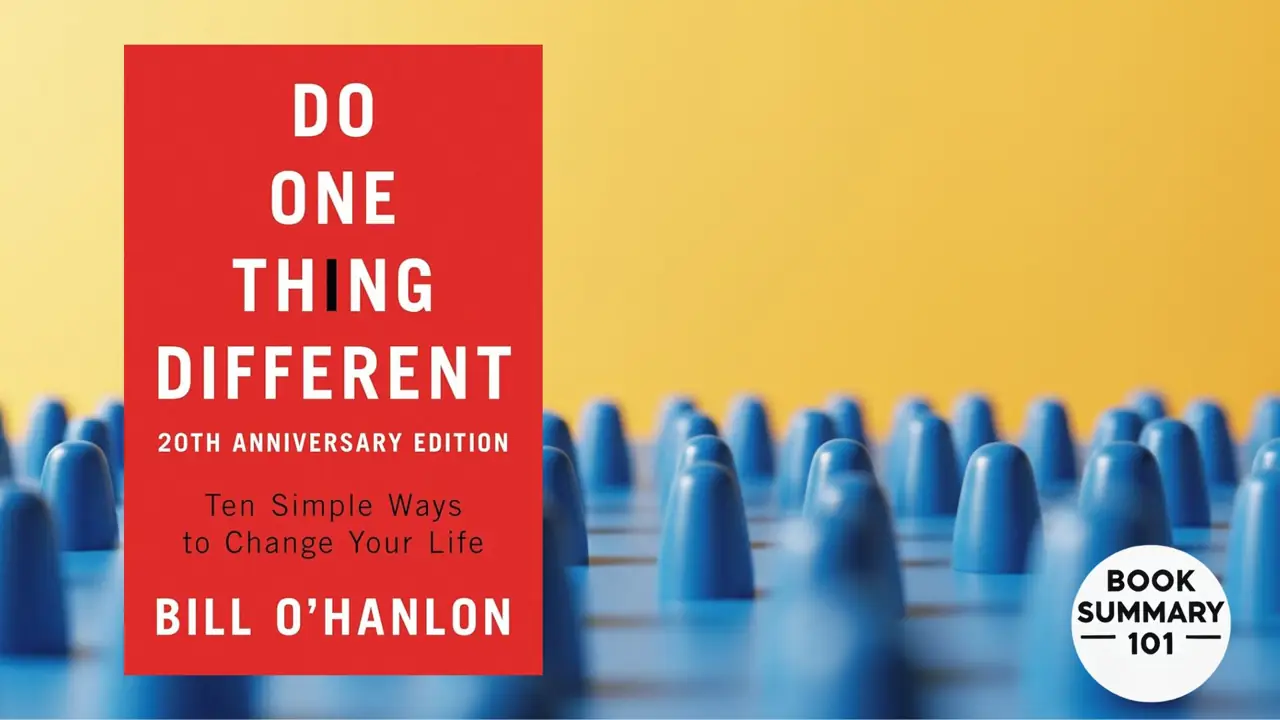
Then, I stumbled upon a slim little book called Do One Thing Different by Bill O’Hanlon. I expected more of the same, but what I found inside felt like a quiet, friendly conversation with a wise therapist who just gets it. It didn’t ask me to climb a mountain; it just asked me to take a single, slightly different step. And honestly? It changed everything.
Why Should You Even Bother Reading It?
This book is for the overthinkers. It’s for the people who are tired of complicated “systems” and 12-step programs. It’s for anyone who feels stuck in a rut—whether that’s a minor bad habit, a recurring argument with a partner, or a general feeling of being in a funk.
The core message is refreshingly simple: Big, lasting change doesn’t come from massive, painful overhauls. It comes from making small, almost unnoticeable tweaks to what you’re already doing. It’s about being a clever detective in your own life, not a drill sergeant.
- Why Should You Even Bother Reading It?
- The Tiny Shifts That Create Massive Change
- 1. Find What’s Working (and Do More of It)
- 2. Change the “Doing” of the Problem
- 3. Hunt for the Exceptions
- 4. Act “As If” the Miracle Has Happened
- 5. Break the Pattern
- My Final Thoughts
- Join the Conversation!
- Frequently Asked Questions (The stuff you’re probably wondering)
The Tiny Shifts That Create Massive Change
Bill O’Hanlon doesn’t give you a giant mountain to climb. Instead, he hands you a few small, clever keys to unlock the patterns that keep you stuck.
1. Find What’s Working (and Do More of It)
Imagine your life is a garden. For years, you’ve been staring at the weeds, trying to figure out where they came from, analyzing their root structure, and agonizing over them. It’s exhausting. O’Hanlon suggests you do something radical: ignore the weeds for a second and look for the one, tiny, healthy flower that’s somehow managed to sprout.
Your job isn’t to understand the weeds; it’s to give that one little flower all the water and sunlight you can.
This is the book’s foundational idea. We’re so trained to focus on our problems, but what if we focused on what’s already working, even in a minuscule way? If you have one “good day” a month, don’t ask why the other 29 were bad. Ask what was different about that one good day. What did you do? Who were you with? What did you think about?
That’s your clue. Your job is to grab onto that clue and replicate it. Do more of that.
A real-world example of this is tackling procrastination. Instead of obsessing over why you can’t focus on your big project for hours, you notice that on Tuesday, you managed to work for 15 solid minutes without getting distracted. What was different? Maybe you had a cup of tea right before. Maybe you were listening to a specific playlist. The solution isn’t to force yourself into a six-hour work session; it’s to try having that cup of tea again tomorrow and see if you can get another 15 minutes in.
Simple Terms: Stop staring at your problems and start watering what’s already growing.
The Takeaway: Amplify the small successes you’re already having instead of trying to build a new solution from scratch.
2. Change the “Doing” of the Problem
Let’s say you have a leaky faucet. You could spend weeks psychoanalyzing the faucet, wondering about its childhood and why it feels the need to drip. Or, you could find the one specific nut that’s loose and give it a quarter-turn.
O’Hanlon argues that our problems are the same. They aren’t just vague feelings; they are a sequence of actions, a “doing.” The problem isn’t just “anger”; it’s the clenched fists, the raised voice, the pacing in the kitchen. If you can change one tiny piece of that “doing,” the whole pattern can fall apart.
📖 “When you are stuck in a problem, you are doing something to maintain that problem. To get unstuck, you must do something different.”
Think about a couple that has the same fight every night. The pattern is: they both get home from work tired, the argument starts in the kitchen while making dinner, and it ends with one person storming off.
To change the “doing,” they don’t need years of therapy. They just need to do one thing differently. What if they agreed to talk about their day in the living room before starting dinner? Or what if they decided to order a pizza one night, completely removing the kitchen-stress trigger? By changing a single element of the physical routine, they disrupt the entire negative loop.
Simple Terms: A problem is a recipe of actions; change one ingredient, and you get a different result.
The Takeaway: Identify the physical and verbal sequence of your problem and introduce a tiny, deliberate change to break the chain.
3. Hunt for the Exceptions
Imagine you’re a detective, but you’re not looking for a criminal. You’re looking for evidence of innocence. Your client is your problem, which insists, “I am always here!” Your job is to find the moments when it’s lying.
This is the “exception hunt.” No problem happens 100% of the time. There are always moments, however brief, when it’s less intense or completely absent. These exceptions are pure gold because they hold the blueprint for the solution.
Someone might say, “I’m anxious all the time.” The exception hunt involves asking gentle questions: “Was there any time in the last week, even for five minutes, when you felt a little less anxious?” Maybe they realize that when they were walking their dog, they weren’t anxious.
Bingo! That’s the exception. The next step isn’t to figure out why they are anxious the rest of the time. It’s to figure out what was different about that dog walk. Was it being outside? The physical movement? The focus on their pet? The solution lies in understanding and expanding those little islands of peace.
Simple Terms: Find the times when your problem isn’t happening and figure out what’s different.
The Takeaway: Your problems don’t exist 24/7. The exceptions to the rule contain the clues to solving it.
4. Act “As If” the Miracle Has Happened
This one feels a little like magic, but it’s incredibly practical. O’Hanlon asks you to imagine that overnight, a miracle happened and your problem was completely gone. You don’t know it happened, but when you wake up, things are different.
What would be the very first, tiny thing you would notice that would tell you the miracle occurred?
Maybe if your problem is social anxiety, the first sign would be that you make eye contact with the barista when you order your coffee. Maybe if it’s a lack of motivation, the first sign would be that you put your running shoes by the door before going to bed.
The trick is this: you don’t have to wait for the miracle. Just do that one small thing. Act “as if” the miracle has already happened. It’s like being an actor playing a role. You’re not trying to be a confident person; you’re just doing one thing a confident person would do. This small action creates a ripple effect, slowly building a new reality.
Simple Terms: If your problem were solved, what’s the first small thing you’d do? Okay, now go do that.
The Takeaway: Acting out a tiny piece of the solution can actually create the feeling and momentum you’ve been waiting for.
5. Break the Pattern
Our habits and problems often run on autopilot, like a train on a well-worn track. Feel bored -> walk to the fridge. Feel stressed -> start scrolling on your phone. The sequence is so automatic we don’t even notice it.
The key is to simply interrupt the pattern. Think of it like putting a small branch on the train tracks. It’s not a brick wall; it’s just something unexpected that forces the train to pause.
📖 “A small change in a key area can ripple out to have a big effect, just as a small rudder can turn a big ship.”
Let’s say you have a habit of biting your nails when you’re nervous. The pattern is: Feel Nervous -> Hand Moves to Mouth. To break the pattern, you could decide that whenever you feel the urge, you have to clench your fist three times first. Or you could put a bad-tasting polish on one nail.
You haven’t solved the underlying nervousness, but you’ve interrupted the mindless, automatic behavior. That brief pause gives you a moment of awareness, a chance to choose a different path. Often, that’s all you need to start dismantling a habit that felt invincible.
Simple Terms: Intentionally do something to interrupt the automatic sequence of a bad habit.
The Takeaway: A small, conscious interruption can derail a powerful, unconscious pattern, giving you back control.
My Final Thoughts
Reading Do One Thing Different felt like taking a deep, calming breath. It’s the antidote to the overwhelming, “hustle-and-grind” culture of self-improvement. It gave me permission to be gentle with myself and to see change not as a monumental effort, but as a series of small, creative experiments.
This book doesn’t just give you advice; it gives you a sense of agency. It makes you feel like a clever and capable scientist in the lab of your own life, running tiny tests and discovering what truly works for you. It’s one of the most empowering and genuinely helpful books I’ve ever read.
Join the Conversation!
What’s one tiny thing you could do differently this week that might make a positive change? Share your idea in the comments below—let’s inspire each other!
Frequently Asked Questions (The stuff you’re probably wondering)
1. Is this book based on a specific psychological theory?
Yes! It’s based on a highly effective and respected approach called Solution-Focused Brief Therapy (SFBT), which Bill O’Hanlon is a key figure in developing. The whole idea is to focus on solutions and futures, not on deep-diving into the history of problems.
2. Do I have to read the ten “ways” in order?
Not at all. You can open the book to any chapter that sounds interesting and start applying the idea immediately. Each “way” is a standalone tool you can use.
3. Is this book only for big life problems like depression or anxiety?
Absolutely not. It’s just as effective for small, annoying habits (like losing your keys) or recurring frustrations (like arguing about chores) as it is for bigger emotional challenges.
4. How is this different from other self-help books?
Most self-help focuses on understanding the why behind your problems. This book almost completely ignores the “why” and focuses entirely on the what and how—what are you doing, and how can you do one small part of it differently to get a new result? It’s all about action.
5. Will this book feel too clinical or academic?
Not a chance. O’Hanlon’s writing style is incredibly warm, conversational, and filled with relatable stories and examples. It feels like you’re getting advice from a kind and practical friend, not reading a textbook.