I used to think “good customer service” was this vague, magical thing. You either had it or you didn’t. I’d walk into a store and get amazing help, then go next door and feel completely ignored. What was the secret sauce?
For years, I just assumed it came down to hiring “nice people.” But I always had a nagging feeling it had to be more systematic than that. How do companies like Disney or Zappos do it so consistently?
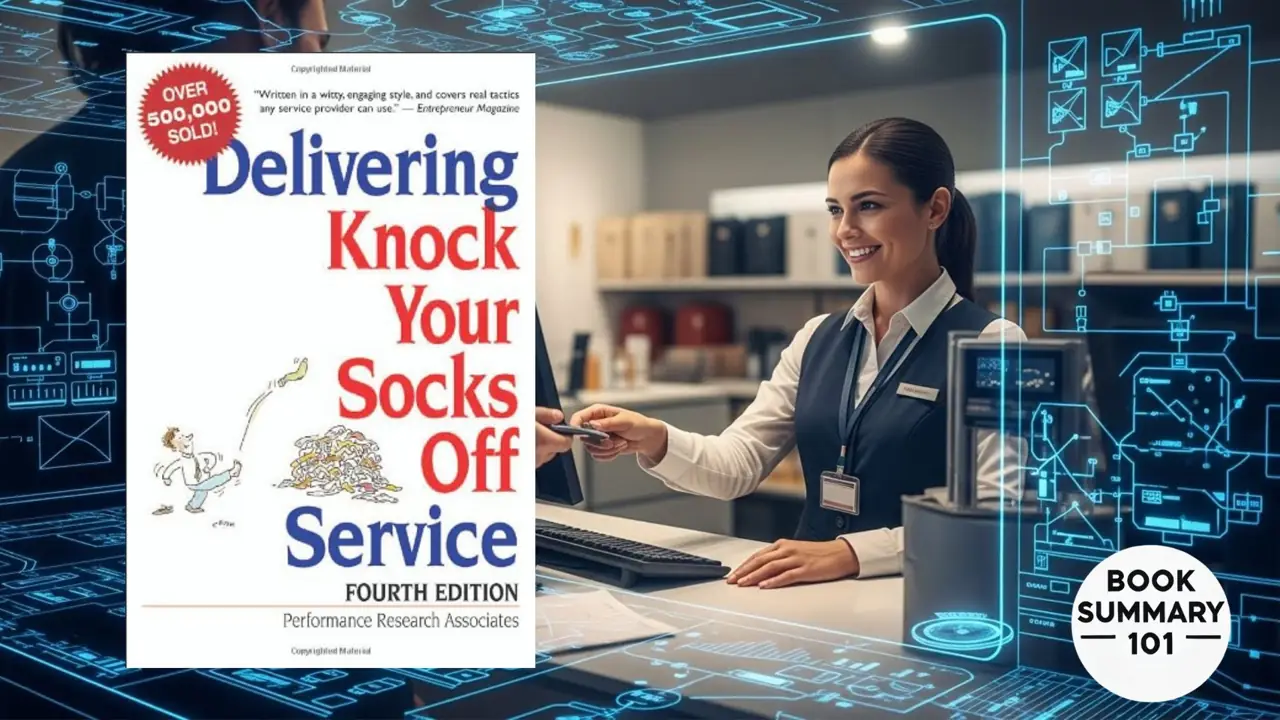
Then I picked up Delivering Knock Your Socks Off Service by Ron Zemke. Honestly, I was expecting a dry, corporate textbook. Instead, it felt like I was having coffee with a wise, funny mentor who just wanted to make things simple. It wasn’t about abstract theories; it was a practical playbook that broke everything down into a clear, memorable system. This book was the lightbulb moment I’d been waiting for.
Why Should You Even Bother Reading It?
This book is for everyone. Whether you’re a CEO, a small business owner, a frontline cashier, or just someone who wants to understand why some companies make you feel valued and others don’t, this book has something for you.
Its message is more critical now than ever. In a world of endless choices, the one thing that truly sets a business apart is how it treats people. This book isn’t just about being polite; it’s about building a powerful, lasting competitive advantage by creating genuinely memorable experiences for your customers.
- Why Should You Even Bother Reading It?
- The Five Pillars of Unforgettable Service
- 1. Reliability: It’s All About Keeping Your Promises
- 2. Assurance: Making Your Customers Feel Safe
- 3. Tangibles: What Your Service Looks Like
- 4. Empathy: The Art of Seeing Through Their Eyes
- 5. Responsiveness: Be Quick, Be Willing
- My Final Thoughts
- Join the Conversation!
- Frequently Asked Questions (The stuff you’re probably wondering)
The Five Pillars of Unforgettable Service
Zemke and his co-authors didn’t just guess what matters to customers; they did the research. They found that all legendary service experiences are built on five core principles, which they organized into a brilliant, easy-to-remember acronym: RATER.
1. Reliability: It’s All About Keeping Your Promises
Let’s start with an analogy. Imagine you buy a beautiful, ornately carved dining room table. It looks stunning. But the first time you lean on it, it wobbles violently. Is it a good table? Of course not. Its beauty is useless because it fails at its primary job: being a stable surface.
Reliability in customer service is that sturdy, non-wobbly foundation. It is, by far, the most important part of the entire service experience. It simply means you do what you promised you would do.
It’s not flashy. It’s not glamorous. But without it, nothing else matters. If your pizza is promised in 30 minutes, it arrives in 30 minutes. If your package is scheduled for Tuesday delivery, it shows up on Tuesday. It’s about accuracy, dependability, and getting it right the first time.
Think about Amazon Prime. Their core promise isn’t friendly drivers or beautiful boxes (though those help). It’s that your stuff will arrive on the date they said it would. That ironclad reliability is why millions of us trust it without a second thought.
Simple Terms: Do what you said you would do, when you said you would do it.
The Takeaway: Customers value a promise kept above all else. Before you try to “delight” them, make sure you can be depended upon.
2. Assurance: Making Your Customers Feel Safe
Have you ever gone to a doctor for a problem you were worried about? A good doctor doesn’t just have a degree hanging on the wall. They project a calm confidence. They listen, explain things clearly, and answer your questions without making you feel foolish. You leave their office feeling that you are in safe, competent hands. That feeling is assurance.
Assurance is the trust your customers have in you. It’s built from the knowledge, skill, and professionalism of your team. Do your employees know the products inside and out? Can they answer questions confidently? Are they courteous and professional?
This is why the Apple Genius Bar works so well. The employees are trained experts who can quickly diagnose a problem, explain the solution in simple terms, and project an aura of competence. You trust them because they inspire confidence. They give you the assurance that your expensive device is in the right hands.
📖 “The customer’s trust in your organization and its employees is a direct result of the knowledge and courtesy of those employees.”
Simple Terms: Show your customers you know what you’re doing and that they can trust you.
The Takeaway: Competence and courtesy aren’t just nice-to-haves; they are powerful tools that reduce customer anxiety and build lasting trust.
3. Tangibles: What Your Service Looks Like
Imagine someone gives you a birthday gift. In one scenario, it’s handed to you in a crumpled plastic bag. In another, it’s presented in a beautiful box, wrapped in crisp paper with a perfectly tied ribbon. The gift inside is exactly the same, but which experience feels more special?
That wrapping paper, box, and ribbon are the “tangibles.” They are the physical evidence of your service—everything your customer can see, touch, and feel. This includes your website’s design, your store’s cleanliness, your employees’ uniforms, your marketing materials, and your product’s packaging.
Tangibles shape perception. A clean, well-lit restaurant feels like it serves better food. A sleek, modern website feels more trustworthy than a clunky one from 1998. A technician who shows up in a clean uniform and a well-organized truck instantly communicates professionalism before they even say a word.
Starbucks is a master of tangibles. From the consistent store layout and comfortable chairs to the branded cups and the aprons on the baristas, every physical detail is designed to communicate a premium, reliable coffee experience.
Simple Terms: Make sure all the physical stuff associated with your service looks professional and appealing.
The Takeaway: Customers judge your service with their eyes long before they experience anything else. The physical details send a powerful message about your quality and care.
4. Empathy: The Art of Seeing Through Their Eyes
When you call a friend to vent about a horrible day, what do you want from them? You don’t necessarily want them to jump in with a 10-step plan to fix everything. First, you just want them to listen and say, “Wow, that sounds incredibly frustrating. I’m so sorry you had to deal with that.” You want them to get it. That’s empathy.
Empathy is the warm, human, caring side of service. It’s the ability to put yourself in the customer’s shoes and understand their feelings. It’s about providing individualized attention and making the customer feel heard, understood, and valued as a person, not just as a transaction.
This is where service heroes are born. The classic example is the customer service team at Chewy. They are famous for their empathetic approach. If a customer calls because their pet has passed away, Chewy doesn’t just process a return for the unused food. They often send a handwritten sympathy card, and sometimes even a bouquet of flowers. That is radical empathy in action, and it creates customers for life.
📖 “Empathy is the ability to see the world from the other person’s point of view—to be able to walk a mile in their shoes.”
Simple Terms: Treat your customers like individual human beings, not like numbers in a queue.
The Takeaway: Logic solves problems, but empathy builds relationships. Making a customer feel understood is often more powerful than just fixing their issue.
5. Responsiveness: Be Quick, Be Willing
Imagine your kitchen is on fire. You call 911, and the operator says, “Okay, we’ve received your request. A fire truck has been dispatched and should be there sometime between Tuesday and Friday.” Unacceptable, right? When you need help, you expect speed and a sense of urgency.
That is responsiveness. It’s a combination of two things: the willingness to help and the promptness of that help. It’s about answering the phone quickly, replying to emails in a timely manner, and having a genuine desire to resolve customer issues without delay.
A slow response feels like indifference. Making a customer wait in a long line, putting them on hold for 20 minutes, or taking three days to reply to an email sends a clear message: “Your time is not important to us.”
Zappos built its entire reputation on responsiveness. They are famous for their 24/7 support line that is answered almost immediately by a helpful, empowered human being. Their speed and willingness to help show customers that they are the top priority, which is why people are so fiercely loyal to the brand.
Simple Terms: Help customers quickly and enthusiastically.
The Takeaway: Speed and willingness to help show customers you respect their time and value their business. A slow response feels like a ‘no.’
My Final Thoughts
What I love most about Delivering Knock Your Socks Off Service is how it demystifies a complicated topic. The RATER model is more than just a clever acronym; it’s a practical checklist. It gives you a framework to diagnose your own business and to understand every service interaction you have as a customer.
It taught me that legendary service isn’t about one-off, grand, expensive gestures. It’s about building a system where you are consistently reliable, trustworthy, empathetic, and responsive, and where every tangible detail supports that mission. It’s about doing the thousand little things right, every single day.
Join the Conversation!
Which of these five principles (Reliability, Assurance, Tangibles, Empathy, or Responsiveness) do you think is the most overlooked by businesses today? Share a story in the comments!
Frequently Asked Questions (The stuff you’re probably wondering)
1. Is this book just for managers or business owners?
Not at all! While it’s essential for leaders, it’s incredibly valuable for any frontline employee. It empowers you with the principles to provide better service, no matter your role.
2. The book has been around for a while. Is the advice still relevant?
Absolutely. The principles are timeless because they are based on fundamental human psychology. While the technology has changed (e.g., social media, email), the core needs of the customer have not.
3. Do I need a background in business to understand it?
Nope! The book is written in clear, simple language and is filled with relatable stories and examples, not corporate jargon. It’s one of the most accessible business books you’ll ever read.
4. If I could only remember one thing from the book, what should it be?
That Reliability is the bedrock of all great service. Before you do anything else, you must be able to deliver on your basic promises consistently. Getting the basics right is more important than any fancy perk.
5. Is it a long or difficult read?
Not in the slightest. It’s a relatively short, practical book designed to be put into action immediately. You can likely read it in a weekend and start applying the concepts on Monday.