Let’s be real for a second. Have you ever sat in a meeting, listened to buzzwords like “AI integration,” “digital transformation,” or “hybrid synergy,” and felt a cold knot of anxiety in your stomach?
I have.
A few months ago, I was looking at the trajectory of my career and realized something terrifying: the skills that got me here probably weren’t going to get me there. The world is moving so fast that “experience” sometimes feels more like “baggage.” I felt like I was using a paper map in a GPS world.
I needed a guide. Not a dusty textbook from the 90s, but something that actually understood where the world is going.
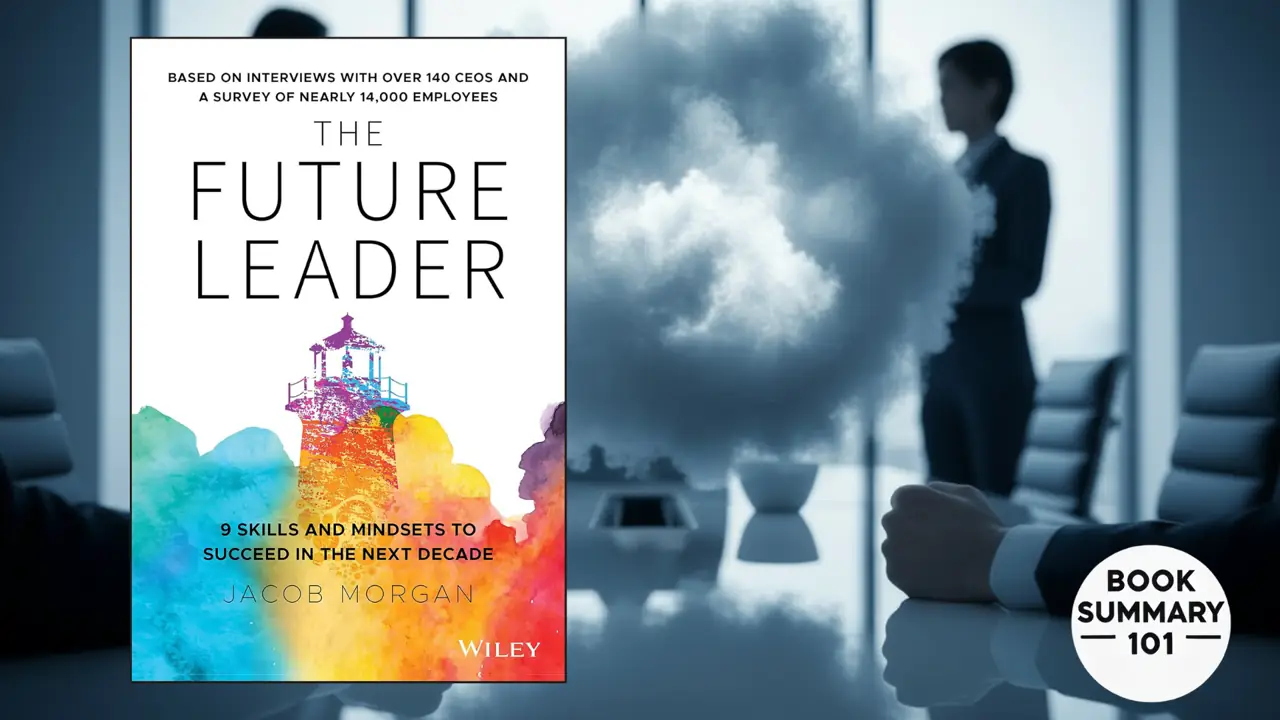
That’s when I picked up “The Future Leader” by Jacob Morgan.
Jacob didn’t just guess what the future looks like; he interviewed over 140 CEOs from companies like Unilever, Mastercard, and Best Buy, and surveyed 14,000 employees. The result? A roadmap. Reading this book felt less like a lecture and more like a friendly intervention. It told me, “Hey, the old way is dead, but don’t panic. Here is exactly what you need to do.”
If you’re feeling that same itch—that the ground is shifting under your feet—grab a coffee. Let’s talk about how to fix it.
- Why Should You Even Bother Reading It?
- The Notable Nine: The Mindsets and Skills You Need Now
- 1. The Chef (Mindset)
- 2. The Futurist (Skill)
- 3. Yoda (Skill)
- 4. The Technology Teenager (Skill)
- 5. The Explorer (Mindset)
- My Final Thoughts
- Join the Conversation!
- Frequently Asked Questions (The stuff you’re probably wondering)
Why Should You Even Bother Reading It?
You might be thinking, “I’m not a CEO, so why does this matter?”
Here is the truth: This book isn’t just for the C-suite. It is for anyone who manages people, anyone who wants to manage people, or anyone who just wants to stay employed in the next decade.
We are currently facing a massive “Leadership Gap.” The skills organizations have right now are not the skills they need for the future. Whether you are a freelancer, a team lead, or an ambitious creative, mastering these concepts is your insurance policy against becoming obsolete.
The Notable Nine: The Mindsets and Skills You Need Now
Jacob Morgan boils down his massive research into a distinct framework called “The Notable Nine.” This consists of 4 Mindsets (how you need to think) and 5 Skills (what you need to do). Think of the Mindsets as the operating system of your brain, and the Skills as the apps you run on top of it.
1. The Chef (Mindset)
Imagine you are in a high-end kitchen. You have access to the most advanced ovens, sous-vide machines, and liquid nitrogen (this is Technology). But you also have organic vegetables, raw meats, and delicate spices (this is Humanity).
If you only use technology, you get a sterile, tasteless meal. If you ignore the technology, you can’t feed everyone efficiently.
Jacob Morgan argues that the future leader must be The Chef. Your job is to balance the two most important ingredients in any business: Humanity and Technology.
In the past, leaders focused heavily on efficiency and numbers (the machine side). But in a future dominated by AI, the human element—empathy, purpose, connection—becomes the premium product. The Chef knows exactly how much “humanity” to sprinkle in to keep the technology from becoming cold and alienating.
Real-World Example:
Think about Spotify’s “Discover Weekly.” It uses hardcore algorithms (Technology) to analyze what you listen to. But the result feels deeply personal, like a mixtape from a best friend (Humanity). A leader acting as a “Chef” ensures their team uses AI to enhance the customer relationship, not replace it with a frustration-inducing chatbot loop.
Simple Terms:
Don’t let the robots run the show, but don’t ignore them either—mix tech and people perfectly.
The Takeaway:
Your value as a leader lies in balancing digital efficiency with human purpose.
2. The Futurist (Skill)
Most people live their work lives staring at their feet, trying not to trip over the problems of today.
The Futurist lifts their head up.
Think of this like driving a car. If you only look at the hood of your car, you’re going to crash. A Futurist is looking at the horizon, scanning for traffic jams, storms, or shortcuts miles down the road.
This doesn’t mean you need a crystal ball. It means you need to be skilled in scenario planning. You need to ask, “If X happens, what will we do? What if Y happens?” It’s about not being surprised. The Futurist understands that there isn’t one future, but many possible futures, and they prepare for several of them.
📖 Quote from the Book:
“The goal of a futurist isn’t to predict the future, it’s to help make sure you aren’t surprised by what the future brings.”
Real-World Example:
Consider the leaders who saw the trend of remote work coming before 2020. They were already testing Zoom, Slack, and asynchronous communication. When the pandemic hit, they didn’t panic—they just shifted gears. That is the Futurist skill in action.
Simple Terms:
Stop reacting to fires and start predicting where the sparks might fly.
The Takeaway:
You must actively dedicate time to thinking about “what comes next” rather than just “what is happening now.”
3. Yoda (Skill)
Yes, Jacob Morgan actually calls this skill Yoda.
When you think of Yoda, do you think of him coding a website or building a spreadsheet? No. You think of emotional intelligence, empathy, and self-awareness.
For decades, we were told that emotions don’t belong in the workplace. “Leave your feelings at the door.” Morgan says that advice is now garbage. In a world where machines can do the logic, the analytics, and the data crunching, Empathy and Emotional Intelligence (EQ) become your superpower.
Being Yoda means understanding what motivates your people, sensing when they are burnt out, and creating an environment of psychological safety. It’s about connection.
Real-World Example:
Look at Satya Nadella when he took over Microsoft. The culture was combative and toxic. He shifted the focus to empathy and a “growth mindset.” He didn’t just change the software; he changed the feeling of working there. That “Yoda” approach resulted in Microsoft becoming one of the most valuable companies on earth.
Simple Terms:
Be emotionally intelligent, empathetic, and support your team like a wise mentor.
The Takeaway:
Soft skills are no longer “nice to have”—they are the hardest and most valuable skills you can possess.
4. The Technology Teenager (Skill)
Have you ever watched a teenager with a new gadget? They don’t read the manual. They don’t take a course. They just start clicking, swiping, and breaking things until they figure it out. They are fearless.
The Technology Teenager is a skill that demands you embrace technology with that same curiosity and lack of fear.
You do not need to know how to code python or build a blockchain. However, you do need to understand what those things are and how they impact your business. You cannot be a leader who says, “Oh, I’m just not a tech person.” That is no longer an acceptable excuse.
Real-World Example:
Imagine a marketing manager who doesn’t know how to build an AI image generator but understands tools like Midjourney enough to know how it can speed up their team’s brainstorming process. They aren’t the engineer; they are the savvy user who knows how to leverage the tool.
Simple Terms:
Stop being afraid of new tech; play with it, break it, and learn it like a 15-year-old would.
The Takeaway:
You don’t need to be a developer, but you must be digitally fluent enough to know what is possible.
5. The Explorer (Mindset)
Finally, we have The Explorer.
Imagine the old style of leadership as a “subject matter expert.” You climbed the mountain, you planted your flag, and you shouted, “I know everything!”
The Explorer knows that there is no top of the mountain. The landscape is constantly changing. The Explorer possesses a mindset of perpetual curiosity and adaptability.
This is about being open to ideas that challenge your current way of thinking. It’s about seeking out the unknown rather than hiding from it. If you stop learning, you stop leading.
📖 Quote from the Book:
“If you think you have made it and that you don’t have anything left to learn, then you have already lost.”
Real-World Example:
Think about Netflix. They started as a DVD-by-mail service. An “expert” would have defended that business model to the death. An “Explorer” (Reed Hastings) was curious about streaming, even though it cannibalized their DVD business. Then they explored content creation. They kept moving, kept exploring, and stayed alive.
Simple Terms:
Stay curious, keep learning, and never assume you know it all.
The Takeaway:
Adaptability and curiosity are more important than your current expertise.
My Final Thoughts
Reading The Future Leader was a relief, honestly.
Sometimes, we feel like we have to be superheroes to succeed in the future—writing code with one hand, solving world peace with the other. Jacob Morgan brings it back down to earth.
The message isn’t that you have to be a machine. The message is that you have to be more human.
The “Notable Nine” aren’t about working harder; they are about working differently. They empower you to let go of the old command-and-control style and embrace a role that is part coach, part futurist, and part chef. It made me feel like the future isn’t something that happens to me, but something I can help shape.
Join the Conversation!
I’d love to hear your take. Looking at the “Notable Nine,” which one do you think is your biggest weakness right now? Are you a tech-phobic “Technology Teenager” or a “Chef” who forgets the human ingredients? Let me know in the comments below!
Frequently Asked Questions (The stuff you’re probably wondering)
1. Is this book too technical for me?
Not at all. While it talks about technology, it focuses on the human side of leading through it. You don’t need a computer science degree to understand it; Jacob uses simple language and great stories.
2. I’m just starting my career. Is this relevant?
100%. In fact, it’s better to learn these habits now than to try to unlearn bad habits 20 years down the road. This gives you a head start on your peers.
3. Do I really need to master all 9 skills and mindsets?
Ideally, yes, but think of it as a spectrum. You might be naturally strong in “Yoda” (empathy) but weak in “The Futurist.” The book helps you identify where to focus your growth.
4. How is this different from other leadership books?
Most leadership books are based on the author’s personal opinion or past experiences. This one is unique because it is data-driven, based on interviews with 140+ current CEOs specifically asking about the future, not the past.
5. Is it a long read?
It’s a substantial book, but it moves fast. Because it’s broken down into the specific skills and mindsets, you can easily digest one chapter at a time without feeling overwhelmed.