I used to think I was allergic to failure.
I’m serious. If I tried a new recipe and burnt it? I wouldn’t cook for a week. If I pitched an idea at work and got a lukewarm reaction? I’d mentally beat myself up for days, replaying the moment in 4K resolution in my head.
We live in a world that is obsessed with highlight reels. We scroll through Instagram and LinkedIn seeing nothing but promotions, perfect sourdough loaves, and seemingly effortless success. It makes the messy reality of our own lives feel wrong. Like we’re broken.
Then, I picked up a tiny little book that completely rewired my brain.
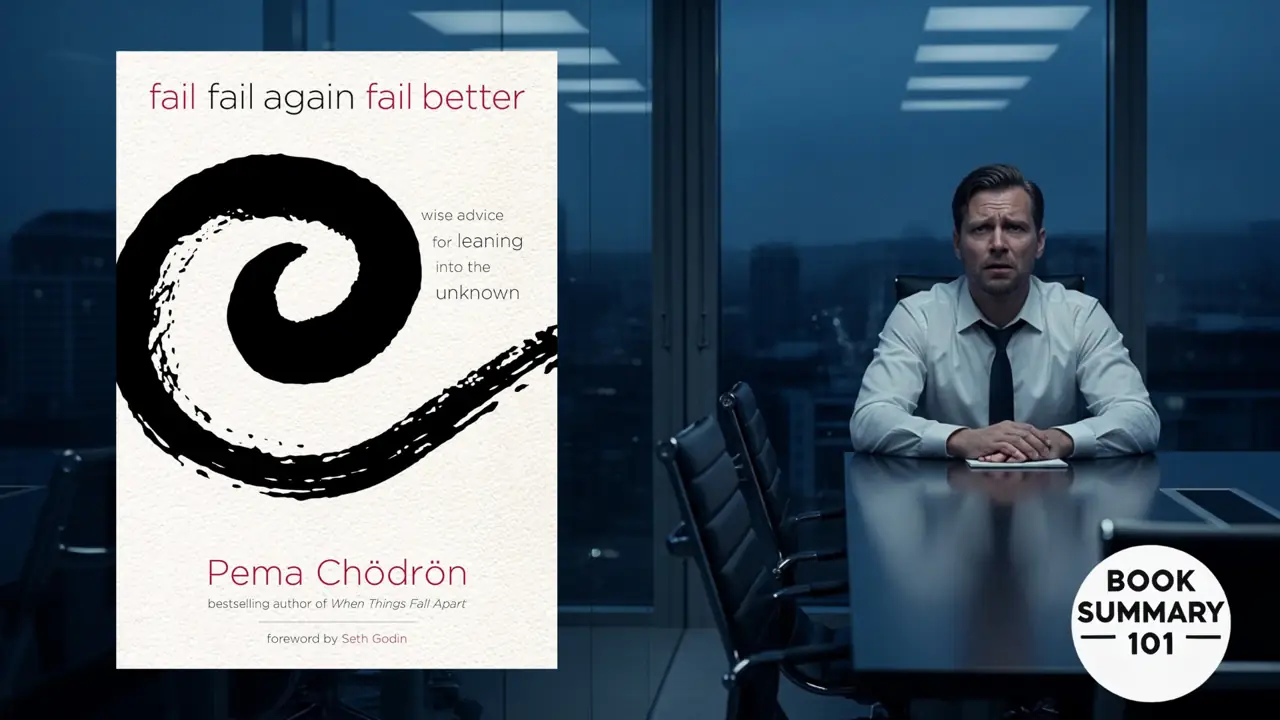
It’s called “Fail, Fail Again, Fail Better“ by the American Buddhist nun Pema Chödrön. It’s short, it’s unassuming, and it felt less like reading a book and more like having a cup of tea with a wise, non-judgmental grandmother who tells you, “Oh honey, the mess is the best part.”
If you are tired of fearing mistakes or feeling like you aren’t “enough,” pull up a chair. Let’s talk about why failure might actually be the secret ingredient you’ve been missing.
- Why Should You Even Bother Reading It?
- The Art of Leaning into the Unknown
- 1. The Samuel Beckett Maxim (Redefining the Goal)
- 2. The “Squeeze” (Staying with the Rawness)
- 3. Dropping the “Story Line”
- 4. Maitri (Unconditional Friendship with Oneself)
- 5. Failure Destroys Arrogance (The Connection to Others)
- My Final Thoughts
- Join the Conversation!
- Frequently Asked Questions (The stuff you’re probably wondering)
Why Should You Even Bother Reading It?
This isn’t a 400-page academic textbook on psychology. It’s actually based on a commencement speech Pema gave, so it’s punchy, accessible, and incredibly human.
You should read this if:
- You struggle with perfectionism and anxiety when things go wrong.
- You’re currently going through a “rough patch” (breakup, job loss, creative block).
- You feel stuck in a cycle of blaming yourself or others when life gets difficult.
The core message is vital right now because we live in a culture that tries to sanitize life. We try to hack our way to permanent happiness. This book argues that pushing away the bad stuff is actually what makes us miserable—and that leaning into the failure is where real confidence comes from.
The Art of Leaning into the Unknown
Pema doesn’t offer a 10-step plan to avoid failure. Instead, she offers a mindset shift on how to coexist with it. She argues that the moments where everything falls apart are actually the most “alive” moments of our lives, if we are brave enough to stay present for them.
Here are the 5 core principles from the book that completely reshaped my thinking on failure.
1. The Samuel Beckett Maxim (Redefining the Goal)
The title of the book comes from a famous quote by Irish writer Samuel Beckett: “Ever tried. Ever failed. No matter. Try again. Fail again. Fail better.”
Most of us view life like a video game where the goal is a “Perfect Run”—getting from start to finish without dying or losing points. When we fail, we think the game is broken. Pema flips this. She suggests that failure isn’t a glitch; it’s a feature.
Think of it like learning to ride a skateboard.
If you see a skater land a kickflip, you’re seeing the result of 1,000 falls. If that skater was terrified of scraping their knee, they would never get on the board. The “failing” is literally the mechanism of learning.
Pema argues that we need to make space for failure. If we are unwilling to fail, we become rigid. We stop taking risks. We stop growing. “Failing better” doesn’t mean you stop failing; it means you stop letting the failure destroy your sense of self-worth.
Real-World Example:
Think about J.K. Rowling. Before Harry Potter, she was a divorced single mother on welfare, describing herself as the “biggest failure I knew.” If she had viewed failure as a stop sign, we wouldn’t have Hogwarts. She used that “rock bottom” as a solid foundation to rebuild her life. She failed, and she used it.
Simple Terms: Stop trying to be perfect; the goal is to keep showing up even when it’s messy.
The Takeaway: Failure is not the opposite of success; it is a necessary stepping stone toward it.
2. The “Squeeze” (Staying with the Rawness)
This is perhaps the most uncomfortable concept in the book, but also the most transformative. Pema describes the feeling of failure as “The Squeeze.”
Imagine you are wearing a pair of shoes that are two sizes too small.
That tight, pinching, claustrophobic feeling? That is what failure feels like emotionally. It’s that knot in your stomach when you realize you made a mistake, or the heat in your face when you get rejected.
Our instinct is to rip the shoes off immediately. We want to numb the feeling with food, scrolling on our phones, or blaming someone else. We want to escape the raw vulnerability.
Pema advises us to do the opposite. She asks us to stay in the squeeze. Don’t run. Just feel the pinch. Why? Because that raw, tender space is where wisdom enters. If we always run away the second things get uncomfortable, we never learn what the situation has to teach us.
📖 “Out of this same space that we want to run away from… out of that, comes our best human qualities of bravery, kindness, and the ability to care about one another.”
Real-World Example:
Consider a difficult breakup. The “Squeeze” is the immense grief and loneliness you feel. The instinct is to immediately jump on a dating app (escaping the squeeze) or trash-talk your ex (blaming). But if you sit with the sadness, as painful as it is, you often come out the other side with a deeper understanding of what you actually need in a partner.
Simple Terms: When you feel emotional pain, don’t distract yourself—feel it fully.
The Takeaway: Escaping discomfort prevents growth; sitting with vulnerability builds emotional resilience.
3. Dropping the “Story Line”
This concept is the tool you use to handle “The Squeeze.” Pema distinguishes between the feeling of failure and the story we tell about it.
Think of it like a movie director with a dramatic narrator.
Something bad happens (Concept A). Immediately, a narrator in your head starts reading a script: “You’re such an idiot. You always do this. Everyone is laughing at you. You’ll never succeed.”
This is the “Story Line.” Pema argues that the feeling (the raw sensation of disappointment) is manageable. It passes. But the Story Line? That can trap us for years. The story line locks the failure in place and turns a momentary mistake into a character flaw.
To “Fail Better,” you have to recognize when the narrator starts talking and gently hit the mute button. You have to separate the raw data (“I lost the client”) from the commentary (“I am a worthless business owner”).
Real-World Example:
Imagine you get a harsh performance review at work.
- The Feeling: A sinking sensation in the gut, heat in the cheeks.
- The Story Line: “My boss hates me. I’m going to get fired. I’m an imposter.”
Pema suggests dropping the story and just feeling the heat in your cheeks. The heat will fade. The story will haunt you.
Simple Terms: Stop narrating your life with negative self-talk; stick to the facts and feelings.
The Takeaway: The event isn’t what hurts us most; it’s the interpretation and judgment we attach to the event.
4. Maitri (Unconditional Friendship with Oneself)
If we are going to stay in “The Squeeze” and drop the story line, we need a safety net. That safety net is a concept called Maitri (pronounced my-tree). It translates roughly to loving-kindness or unconditional friendship with oneself.
Imagine you are training a puppy.
If the puppy pees on the rug, do you kick it out of the house and tell it it’s a bad dog forever? No. You might be frustrated, but you look at that clumsy, messy little creature with love. You clean it up and try again.
Pema asks: Why don’t we treat ourselves like the puppy?
Usually, when we fail, we become our own worst enemy. We say things to ourselves we would never say to a friend. Maitri is the practice of looking at your own mess—your jealousy, your anger, your mistakes—and saying, “I see you, and I’m not leaving.” It’s having your own back when you hit rock bottom.
📖 “We can stop struggling with what occurs and see its true face without calling it the enemy. It helps to remember that our practice is not about achieving perfection. It’s about loving ourselves as we are.”
Real-World Example:
You break your diet and eat half a pizza.
- Non-Maitri approach: “I have no willpower. I’m disgusting. I might as well eat the rest.”
- Maitri approach: “Okay, that happened. I was stressed. I’m human. I’ll have a healthy breakfast tomorrow. I still love me.”
Simple Terms: Be as kind to yourself as you would be to a best friend who messed up.
The Takeaway: Self-compassion is a stronger motivator for change than self-criticism.
5. Failure Destroys Arrogance (The Connection to Others)
Finally, Pema explains the hidden benefit of failing: it connects us to the rest of humanity.
Think of success like standing on top of a high pedestal.
It’s a great view, but it’s very lonely up there. You are separated from everyone else. Success can breed arrogance; it can make us feel like we are better than others.
Failure kicks the pedestal out from under us. We fall down into the mud. But guess who else is in the mud? Everyone else.
When we are vulnerable and broken, we suddenly understand other people’s pain. We become less judgmental. We become softer. Failure is the great equalizer that destroys our ego and allows genuine empathy to bloom. If you never failed, you would be insufferable.
Real-World Example:
Think of a wealthy celebrity who goes through a public scandal or addiction.
Suddenly, they stop seeming like untouchable gods and seem like human beings. Their struggle makes them relatable. Your own struggles do the same for you—they make you a more empathetic friend, partner, and leader.
Simple Terms: Failing keeps you humble and helps you understand other people’s struggles.
The Takeaway: Your imperfections are what make you capable of true connection and empathy.
My Final Thoughts
Reading Fail, Fail Again, Fail Better felt like a massive weight being lifted off my shoulders. I realized I had been spending so much energy trying to curate a “perfect” life that I was missing the point of living.
Pema Chödrön teaches us that we don’t have to like failure. It still hurts. It’s still annoying. But we can stop being afraid of it. We can stop letting it define our worth. When we lean into the sharp points of life, we find out that we are much stronger and softer than we ever imagined.
So, go out there. Try the thing. Mess it up. Then, with a lot of kindness for yourself, try again.
Join the Conversation!
I’d love to hear from you in the comments below:
What is a “beautiful failure” from your past that actually taught you something valuable or pointed you in a better direction?
Frequently Asked Questions (The stuff you’re probably wondering)
1. Is this book religious? Do I need to be Buddhist to read it?
Not at all. While Pema Chödrön is a Buddhist nun, the advice in this book is secular and practical. It deals with human emotions like fear and shame, which are universal. You don’t need to meditate or chant to get value from it.
2. Is it a long read?
No, it is incredibly short! You can read the whole book in about an hour or two. It’s small enough to fit in a coat pocket, making it a great “emergency guide” to carry around.
3. Isn’t “accepting failure” just being lazy?
This is a common misconception. Accepting failure doesn’t mean you stop trying or give up on your goals. It means you stop attacking yourself when things go wrong. Ironically, when you stop fearing the shame of failure, you often become more productive and willing to take risks.
4. Does the book give practical steps?
It’s not a “checklist” book (e.g., “Do these 3 things to fix your life”). It’s a “mindset” book. It offers mental frameworks and perspectives to change how you react to situations.
5. Is there an audiobook version?
Yes! I highly recommend the audio version if you can find it (often bundled with other talks). Pema has a very soothing, humorous, and grandmotherly voice that adds a lot of warmth to the message.