I remember staring at my monthly budget a few years ago, feeling a knot tighten in my stomach. Everything was… fine. I had a good 9-to-5 job, and I was paying my bills. But my entire financial world was balanced on that one single pillar. If that pillar wobbled—due to a layoff, an unexpected recession, or just a change in my industry—the whole thing would come crashing down.
The idea of starting a “side hustle” felt completely overwhelming. It sounded like something for tech geniuses building apps in their garage or marketing gurus with 50,000 Instagram followers. It didn’t feel like something for me.
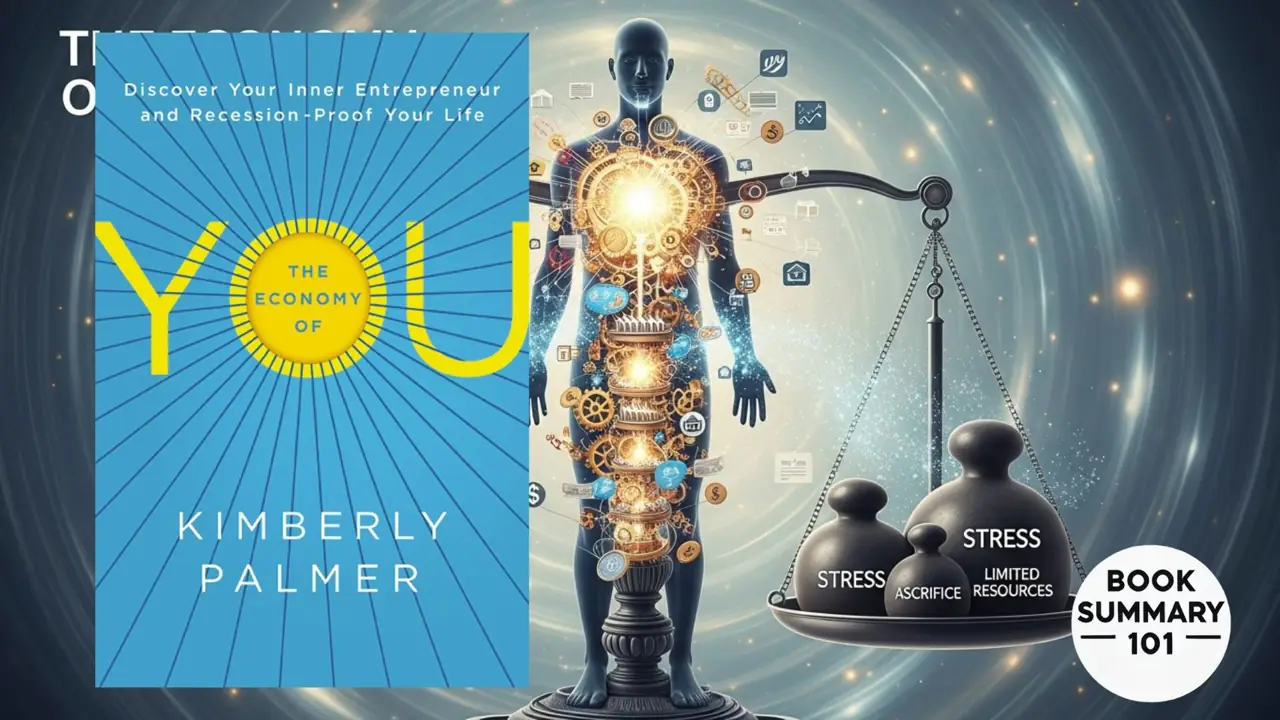
Then I picked up Kimberly Palmer’s The Economy of You, and it felt like a friend was sitting across from me at a coffee shop, calmly saying, “Hey, it’s not that complicated. Let’s break it down.” This book didn’t sell me a dream of becoming a millionaire overnight. Instead, it gave me a practical, encouraging, and surprisingly simple blueprint for building a small, personal safety net.
- Why Should You Even Bother Reading It?
- The Blueprint for Your Side-Gig Success
- 1. Finding Your “Plus-One” Income Stream
- 2. The “50-to-1 Rule” for Finding Your Idea
- 3. Building a “Mini-Brand,” Not an Empire
- 4. Mastering the “Juggle” Without Dropping the Balls
- 5. Overcoming the “Impostor” in Your Head
- My Final Thoughts
- Join the Conversation!
- Frequently Asked Questions (The stuff you’re probably wondering)
Why Should You Even Bother Reading It?
This book is for anyone who has ever thought, “I wish I could make a little extra money from my [insert hobby here].” It’s for the 9-to-5er who feels a little anxious about job security. It’s for the creative person who wants an outlet that might also pay for a vacation.
It’s not for people who want to raise venture capital and build the next Facebook. It’s for the rest of us. The core message is that in today’s world, the smartest career move you can make is to diversify your income. This book shows you how to do it without losing your mind (or your day job).
The Blueprint for Your Side-Gig Success
Kimberly Palmer doesn’t just give you a vague “go start a business” pep talk. She lays out a clear, step-by-step roadmap that makes the whole process feel manageable, and it all revolves around a few key ideas.
1. Finding Your “Plus-One” Income Stream
Think about it this way: a smart investor would never put 100% of their money into a single stock. That’s just too risky! So why do most of us put 100% of our earning potential into a single job?
Palmer’s core idea is that you need to create your own “Economy of You,” and that starts with adding a “plus-one” to your main income. It’s not about replacing your job; it’s about supplementing it. This extra stream of income acts as a buffer, a safety net that protects you from life’s unpredictability.
It could be small—an extra $200 a month—or it could grow into something substantial. But the goal isn’t just financial. It’s also about fulfillment. You get to build something that is entirely yours, on your own terms, based on something you genuinely enjoy.
A fantastic real-world example is a friend of mine, an IT specialist by day, who absolutely loves vintage furniture. He started spending his weekends finding, restoring, and re-selling mid-century modern chairs on Facebook Marketplace. It started as a hobby, but now his “chair money” pays for his family’s annual vacation. He diversified his skills and created a financial cushion doing something he loves.
- Simple Terms: Don’t rely on one job; create a second, smaller source of income based on your skills or passions.
- The Takeaway: Building a side hustle is like diversifying your financial portfolio—it’s a smart, modern way to create stability.
2. The “50-to-1 Rule” for Finding Your Idea
Okay, so you’re sold on the idea, but what on earth could you do? This is where most of us get stuck. Palmer introduces a brilliant concept to get you past this hurdle: the 50-to-1 Rule.
Imagine you’re panning for gold. You don’t just stick your hand in the river and pull out a giant nugget. You have to scoop up pan after pan of gravel, dirt, and water, sifting through it all just to find one tiny, shiny flake. That’s exactly what brainstorming a business idea is like.
The 50-to-1 Rule says that to find one great idea, you need to be willing to generate 50 “bad” ones first. The goal is to shut off your inner critic and just write. Don’t judge. Don’t overthink. Just make a massive list.
For example, you might list:
- Walking dogs
- Selling knitted scarves on Etsy
- Proofreading college essays
- Teaching guitar lessons online
- Creating custom spice blends
- Organizing people’s garages
Most of them won’t be right for you. But somewhere in that list of 50, you might find one or two that make you think, “Hey… wait a minute. I could actually do that.” It gives you permission to be messy and creative, which is where the best ideas are born.
- Simple Terms: Brainstorm 50 potential side-gig ideas without judging them to find the one that sticks.
- The Takeaway: Don’t search for a perfect idea; generate a high volume of ideas and let the good one reveal itself.
3. Building a “Mini-Brand,” Not an Empire
The word “brand” can be intimidating. It brings to mind Nike’s swoosh or Apple’s iconic logo. But Palmer reassures us that for a side-gig, your brand can be much simpler. It’s really just about your reputation and your personal touch.
Think of it like the difference between a giant supermarket chain and your local farmers’ market. The supermarket is massive, anonymous, and built for scale. But at the farmers’ market, you buy tomatoes from the person who actually grew them. You know their name, you trust their quality, and you feel a connection. That’s your mini-brand.
You don’t need a flashy logo or a multi-million dollar ad campaign. Your brand could be built on being the most reliable dog walker in your neighborhood, the baker who makes the most beautiful custom birthday cakes, or the freelance writer who never, ever misses a deadline. It’s about being you, consistently and authentically.
📖 “The new American Dream is one of self-determination and financial independence. It’s a dream of building a business on the side, of creating your own safety net.”
This quote really captures the spirit of it all. You’re not trying to compete with Walmart. You’re building a small, trusted operation that reflects your own values and skills.
- Simple Terms: Your brand is just your reputation for doing good work and being yourself.
- The Takeaway: Start small and focus on building trust and a personal connection with your first few customers.
4. Mastering the “Juggle” Without Dropping the Balls
This is the big one, right? How do you add a side hustle to an already busy life with a job, family, friends, and the need to sleep?
Palmer tackles this head-on. The analogy is simple: you’re a juggler. If you’re already juggling three balls (job, family, social life), you can’t just toss a fourth one in there and hope for the best. You’ll drop everything. Instead, you have to adjust your entire rhythm to accommodate the new ball.
This means being ruthless about your time and energy. It requires setting firm boundaries. Maybe you dedicate two evenings a week, from 8 PM to 10 PM, as your official “side-gig hours.” You tell your family that’s your protected work time. You turn off Netflix, put your phone on silent, and focus.
It also means accepting that something has to give. You might not be able to watch as much TV or you might have to say no to some social invitations. The key is to be intentional. A real-world example is using a simple project management tool like Trello. You can have one board for your day job tasks, one for your side-gig projects, and one for household chores. It keeps you from feeling like all the “balls” are flying at your head at once.
- Simple Terms: You have to intentionally schedule and protect time for your side hustle, which may mean sacrificing other activities.
- The Takeaway: Successfully balancing a side-gig requires deliberate time management and setting clear boundaries, not just “finding” extra time.
5. Overcoming the “Impostor” in Your Head
Starting something new is terrifying. That little voice in your head starts whispering: “Who are you to do this? There are people way more qualified than you. You’re going to fail.”
Palmer acknowledges that this fear—this Impostor Syndrome—is the single biggest thing that stops people. Her advice is not to wait for the fear to go away, but to act in spite of it.
Think of it like learning to ride a bike. No one just hops on a two-wheeler and pedals away perfectly. You start with training wheels. You’re wobbly, you’re scared you’re going to fall, and you probably will fall a few times. But you don’t become a confident rider by staring at the bike in your garage. You get confident by getting on, wobbling, and pushing through the fear.
📖 “The biggest mistake you can make is to let the fear of what could go wrong prevent you from taking any action at all.”
If you’re an accountant who wants to sell your photography, don’t start by trying to book a $5,000 wedding. Start by offering a free portrait session to a friend to build your portfolio. Then charge a small amount for your next one. Each small step builds the confidence you need to silence that impostor voice.
- Simple Terms: The fear of not being good enough is normal; the only way to beat it is by taking small, manageable actions.
- The Takeaway: Don’t wait for confidence to come before you start. Start, and the confidence will come.
My Final Thoughts
What I love most about The Economy of You is its sense of permission. It gives you permission to start small, to be imperfect, and to build something just for you. It reframes the idea of entrepreneurship from a massive, terrifying leap into a series of small, walkable steps.
Reading this book didn’t make me quit my job to launch a billion-dollar startup. But it did give me the confidence to start a small freelance writing gig on the side. It helped me build my own little safety net, and the feeling of empowerment that comes from that is priceless. It’s a reminder that you are in control of your own economy.
Join the Conversation!
Have you ever thought about turning a hobby or a skill into a side hustle? I’d love to hear what it is and what, if anything, is holding you back! Share in the comments below.
Frequently Asked Questions (The stuff you’re probably wondering)
1. Is this book only for people who want to start an online business?
Not at all! The principles apply to any kind of side gig, whether it’s selling physical products (like baked goods or crafts), offering a local service (like pet sitting or home organizing), or building an online presence.
2. Do I need a lot of money to start?
Definitely not. The book champions the “lean startup” model, focusing on ideas that require minimal upfront investment. Many of the ideas discussed can be started with less than $100.
3. Is the advice still relevant today?
Absolutely. The book was published a few years ago, but its core message about income diversification, starting small, and overcoming fear is more relevant than ever in our current economic climate. The fundamental principles are timeless.
4. How is this different from other business books?
Most business books are about scaling, disruption, and going “all in.” This book is the opposite. It’s a practical guide for people who want to build something on the side while keeping the security of their full-time job. It’s about balance, not burnout.
5. Do I need to have a business idea before reading it?
Nope! In fact, it’s perfect if you don’t have an idea. A significant portion of the book is dedicated to the brainstorming process (like the 50-to-1 Rule) to help you discover a side hustle that’s the perfect fit for you.