Let’s be real for a second. How many times have you stood in front of the mirror, pinching a bit of belly fat, and thought, “If I just had a little more willpower, this would be gone”?
I’ve been there. I spent years treating my body like a simple bank account. I thought that if I just deposited fewer calories (eating less) and withdrew more (running on the treadmill until I felt dizzy), the weight would vanish.
But it didn’t. Or if it did, it came roaring back the second I looked at a bagel.
I felt like a failure. I felt like I was just naturally lazy or greedy.
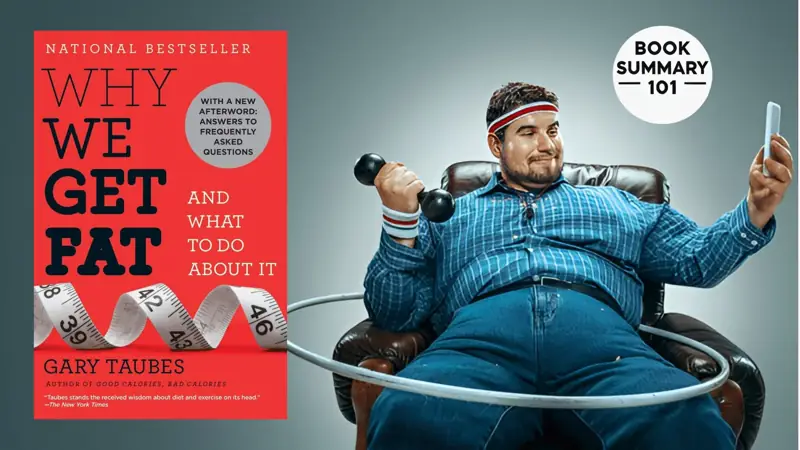
Then I picked up Why We Get Fat: And What to Do About It by Gary Taubes. It didn’t just change my diet; it changed my entire worldview. It was like sitting down with a brilliant, slightly rebellious scientist who looked me in the eye and said, “It’s not your fault. You’ve just been given the wrong instruction manual for your body.”
This book argues that the “calories in, calories out” model isn’t just slightly off—it’s scientifically bankrupt.
If you’re tired of being hungry, tired of the guilt, and tired of advice that never works long-term, pull up a chair. Let’s talk about the science of why we actually get fat.
Why Should You Even Bother Reading It?
If you are a human being who eats food, this book is relevant to you.
However, it is essential reading for anyone who has ever felt demoralized by a diet. Whether you are a busy parent trying to shed post-pregnancy weight, a corporate professional tired of the “middle-age spread,” or just someone confused by the conflicting nutrition advice on Instagram, this book clears the fog.
Taubes cuts through the dogma to explain why the obesity epidemic is exploding despite us all trying to “eat healthy.” It’s not a diet book in the traditional sense; it’s a biology lesson that hands you the keys to your own metabolism.
- Why Should You Even Bother Reading It?
- The Biological Reality Check That Will Blow Your Mind
- 1. The Thermodynamics Myth (The Crowded Room Analogy)
- 2. The Cause and Effect Reversal (The Growing Child)
- 3. Insulin: The Fat-Storage Turnstile
- 4. Internal Starvation (Why You’re Lazy and Hungry)
- 5. The Carbohydrate Hypothesis
- My Final Thoughts
- Join the Conversation!
- Frequently Asked Questions (The stuff you’re probably wondering)
The Biological Reality Check That Will Blow Your Mind
We need to throw out the old rulebook. Taubes systematically dismantles the accepted wisdom of the last fifty years, replacing vague theories with hard endocrinology (the study of hormones). Before we dive into the specific mechanics, understand this: Obesity is not a character flaw; it is a hormonal defect.
Here are the core principles from the book that completely reshaped my thinking.
1. The Thermodynamics Myth (The Crowded Room Analogy)
We have been beaten over the head with the Laws of Thermodynamics. Experts say, “You get fat because you consume more energy than you expend.” Technically, this is true, but it is completely useless information.
Taubes uses a brilliant analogy to explain why. Imagine a crowded room.
If you ask, “Why is this room so crowded?” and I answer, “Because more people entered than left,” I am technically correct. But I haven’t told you anything useful. I haven’t explained why they came in or why they stayed. Is there a free buffet? Is there a fire outside?
Saying we get fat because we overeat is like saying the room is crowded because people entered. It describes the process, but not the cause.
The book argues that overeating doesn’t cause obesity; obesity causes overeating.
We don’t get fat because we eat too much; we eat too much because our fat tissue is actively sucking energy out of our bloodstream, forcing us to eat more to compensate.
Simple Terms: Counting calories explains how weight is gained, but not why your body decided to store it.
The Takeaway: Stop obsessing over the math of calories and start looking at what drives the hunger.
2. The Cause and Effect Reversal (The Growing Child)
This is the concept that made me drop the book in shock. Taubes flips the script entirely.
Think about a teenager going through a massive growth spurt. They eat everything in the fridge. Do they grow taller because they ate a lot of food?
No. That’s ridiculous.
They eat a lot of food because their body is secreting growth hormones. Those hormones are demanding energy to build bone and muscle. The growth drives the hunger, not the other way around.
Taubes argues that becoming fat works the same way.
If your hormones (specifically insulin) are signaling your fat cells to grow, your body will demand more food to fulfill that order. You can’t stop the growth just by eating less; your body will just shut down your energy expenditure (making you tired) to keep feeding the fat cells.
📖 “We don’t get fat because we overeat; we overeat because we get fat.”
Simple Terms: Your body demands food because it is already in the process of building fat tissue due to hormonal signals.
The Takeaway: You cannot starve a hormonal drive; you have to change the hormone.
3. Insulin: The Fat-Storage Turnstile
If calories aren’t the main villain, what is? Meet Insulin.
Taubes identifies insulin as the primary regulator of fat metabolism. Think of insulin like a turnstile at a subway station.
When insulin levels are high, the turnstile only spins one way: IN.
When you eat carbohydrates (sugar, flour, starch), your blood sugar spikes. Your pancreas pumps out insulin to manage it. Insulin takes that energy and shoves it into your fat cells for safekeeping.
Here is the kicker: As long as insulin is high, the turnstile is locked. You cannot get the fat back out to burn it for energy. It is chemically impossible.
If you eat a high-carb diet, your insulin is chronically elevated. You are constantly storing fat and never burning it. You are trapping energy in your “savings account” but you lost the PIN code to withdraw it.
Simple Terms: Insulin is the hormone that tells your body “Stop burning fat and start storing it.”
The Takeaway: To lose weight, you must lower your insulin levels, and the only way to do that is to restrict carbohydrates.
4. Internal Starvation (Why You’re Lazy and Hungry)
This section vindicated me personally. We often view obese people as gluttonous (eating too much) and slothful (moving too little). Taubes explains that these are actually symptoms of “internal starvation.”
Imagine your body is a house heated by oil. You have a massive oil tank in the basement (your body fat). However, the pipe connecting the tank to the furnace is clogged (high insulin).
Even though you have 100,000 calories of energy stored in your fat tissue, your muscles and brain can’t access it because high insulin has locked the door.
So, what does your body do? It panics. It thinks it’s starving.
- It makes you hungry: It screams for more easy energy (sugar/carbs).
- It makes you lethargic: It shuts down non-essential systems. You feel tired, cold, and unwilling to exercise.
You aren’t lazy; your cells are literally starving in the midst of plenty.
📖 “The animal doesn’t get fat because it’s lethargic; it’s lethargic because it’s getting fat.”
Simple Terms: High insulin traps your energy in fat cells, leaving the rest of your body starving and tired.
The Takeaway: “Moving more” is nearly impossible when your cells are denied energy; fixing the diet restores your energy naturally.
5. The Carbohydrate Hypothesis
So, if insulin is the problem, what triggers the insulin? It’s not fat. It’s not protein. It is carbohydrates.
Taubes takes us through the history of nutrition to show that, until recently, this was common knowledge. Farmers have known for centuries that if you want to fatten up cattle, you don’t feed them fat—you feed them grain.
The book argues that “refined” carbohydrates—sugar, high-fructose corn syrup, white flour, and even starchy vegetables like potatoes—are the primary trigger for the insulin response that leads to obesity.
The more easily digestible the carbohydrate, the faster the blood sugar spike, and the higher the insulin response. This explains why you can eat a 300-calorie steak and feel full for hours, but eat 300 calories of pretzels and be starving an hour later. The steak didn’t spike your insulin; the pretzels did.
Simple Terms: Sugars and starches trigger the hormone that makes you fat; fat and protein do not.
The Takeaway: To unlock your fat stores, you must minimize the foods that spike insulin (carbs).
My Final Thoughts
Reading Why We Get Fat felt less like reading a diet book and more like discovering a conspiracy theory that turned out to be true.
For years, we’ve been told that weight loss is a battle of will against nature. Taubes showed me that it’s actually a battle of biology against modern food.
The most empowering part of this book is the release of guilt. If you are overweight, it is not because you are a weak person. It is because your body is reacting perfectly to an imperfect food environment. By changing the input (removing the carbs), you can fix the hormonal defect. It’s not about suffering; it’s about healing.
Join the Conversation!
I’d love to hear from you. Have you ever gone on a “low calorie” diet where you were hungry all the time, only to gain the weight back immediately? How did that make you feel about your own willpower? Let me know in the comments below!
Frequently Asked Questions (The stuff you’re probably wondering)
1. Is this book basically just promoting the Keto diet?
Essentially, yes. While Taubes doesn’t sell a branded “Keto” program, the science he presents supports a low-carbohydrate, high-fat way of eating (LCHF), which is the foundation of the Ketogenic diet.
2. Does this mean I don’t have to exercise to lose weight?
According to the book, exercise is fantastic for your heart, your mood, and your general health, but it is not the primary driver of weight loss. You should exercise to be healthy, not to burn off a donut.
3. If I cut carbs, won’t I have a heart attack from eating fat?
Taubes spends a good portion of the book debunking the idea that dietary fat causes heart disease. He argues that refined carbs and sugar are the true culprits behind inflammation and heart issues, not saturated fats.
4. Is this book too technical for the average reader?
Not at all. While Good Calories, Bad Calories (his previous book) is a dense academic tome, Why We Get Fat was written specifically to be a shorter, punchier, and easier read for the general public.
5. What is the one thing I should stop eating immediately?
Liquid sugar. Sodas, fruit juices, and sugary sports drinks are the absolute worst offenders for spiking insulin and locking away fat. If you do nothing else, cut those out.